
By Mehzebin Adam, Curator, British Red Cross Museum and Archives
Museum of kindness, an exhibition installed in our new display spaces at the British Red Cross head office, showcases over 150 years of history. It follows the journey of the British Red Cross through the stories of people who have shaped our history and those who are part of our story today. The historical and contemporary items, many on display for the first time, hold memories of humanity, kindness and resilience.
There are eight key themes in the exhibition: Origins of the Red Cross Movement, Beginnings of the British Red Cross, First World War, Second World War, Refugees and displacement, Disaster response and preparedness, First aid training, and Health and social care.
The exhibition celebrates some of the lesser-known people and stories within the history of the British Red Cross. It features women, such as Florence Nightingale, working as influential leaders from the very beginning of our humanitarian journey. Florence Nightingale’s work caring for soldiers during the Crimean War was an inspiration for Henry Dunant, the founder of the Red Cross and Red Crescent Movement.
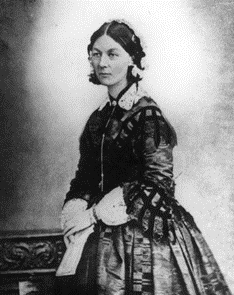
When the British Red Cross was formed in 1870, Nightingale joined the Ladies’ Committee, chaired by Princess Christian of Schleswig-Holstein, and participated in the work of the Red Cross throughout the rest of her life.
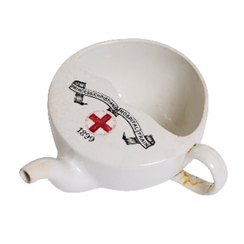
Women war artists
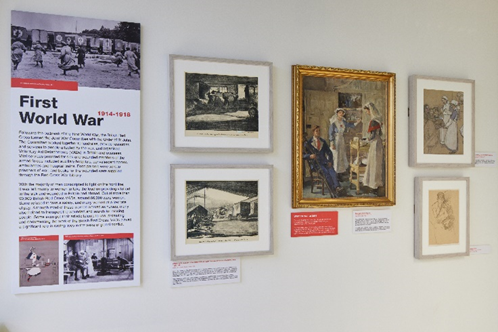
The work of women war artists has often been overlooked, but the British Red Cross Museum collection holds many artworks created by women, showing the crucial role they played in interpreting and documenting the First World War. Some of these artworks by British Red Cross volunteers are on display, allowing us to see the war through their eyes. They capture the experiences of women who carried out humanitarian work in Britain and overseas.
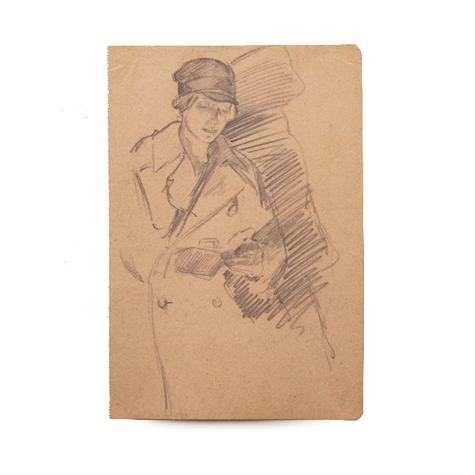
This sketch of a female ambulance driver was drawn by Olive Mudie-Cooke, who worked as an ambulance driver and interpreter for the Red Cross. Although driving motor vehicles was previously considered inappropriate for women, the war changed attitudes towards women as they successfully carried out jobs traditionally undertaken by men.
Creativity in crisis
Some of the most fascinating and inspiring items in our museum collection are the creative objects made by people during crises. These objects capture the incredible strength and resilience of the human spirit in challenging situations.
The Changi quilt was created by women internees in Changi Jail in 1942. The women worked together to make patchwork quilts for the wounded men in the hospital in the Changi prison camp. Each contributor put ‘something of herself’ on a square. It was hoped that embroidering would relieve boredom and boost morale. Women whose husbands or other male family members were held separately also used the quilts to communicate. For many men, the quilts brought the first news their loved ones had survived.
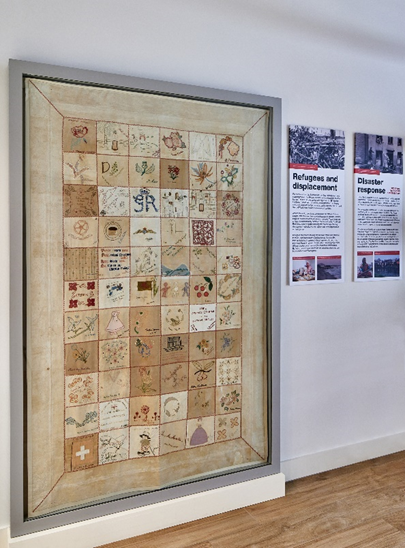
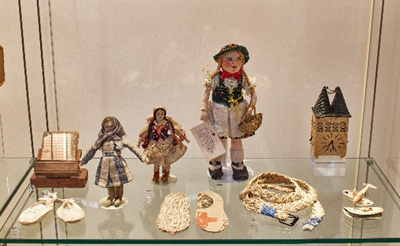
The exhibition also features objects made by civilian internees and concentration camp survivors during the Second World War. Some were made using packaging materials from Red Cross food parcels.
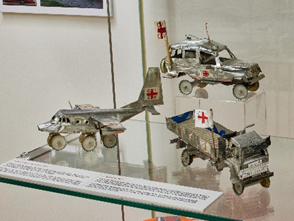
These vehicle models were made by children in Angola in 1995, mainly out of Red Cross food aid tins. They were given to a British Red Cross delegate who worked as a field nurse in Angola.
First aid and medical collections
The first aid and medical items in the exhibition highlight our significant work in relation to health, from promoting life-saving skills and healthy living to providing vital services and equipment needed to help people in times of war and peace.
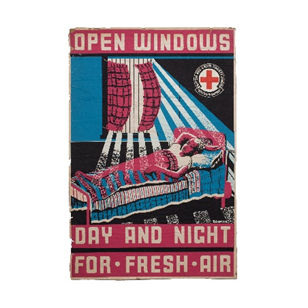
Visitors to the museum can browse posters used to raise awareness around first aid skills and disease prevention and promote kindness during the Covid-19 pandemic. It also features medical equipment used during the First and Second World Wars, including a first aid kit and blood transfusion equipment.
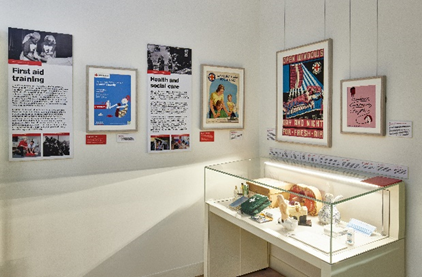
This poster was produced by an overseas branch of the British Red Cross during the 1950s. Staff and volunteers from our overseas branches have made, and continue to make, significant contributions to our vital peacetime work.
Visit the museum
To visit our museum, please book via email: museum@redcross.org.uk
More visiting information here: https://www.redcross.org.uk/about-us/our-history/museum-and-archives/museum-of-kindness
Purchase the exhibition catalogue book to learn more: giftshop.redcross.org.uk/museum-book
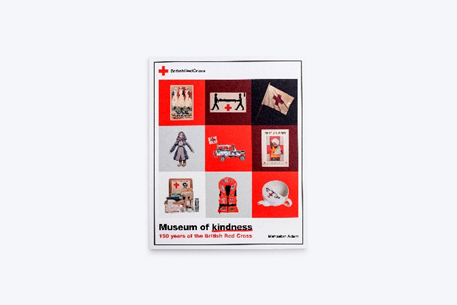
Profits from the sale of the book will go towards helping people in crisis.
All images © British Red Cross Museum and Archives.