
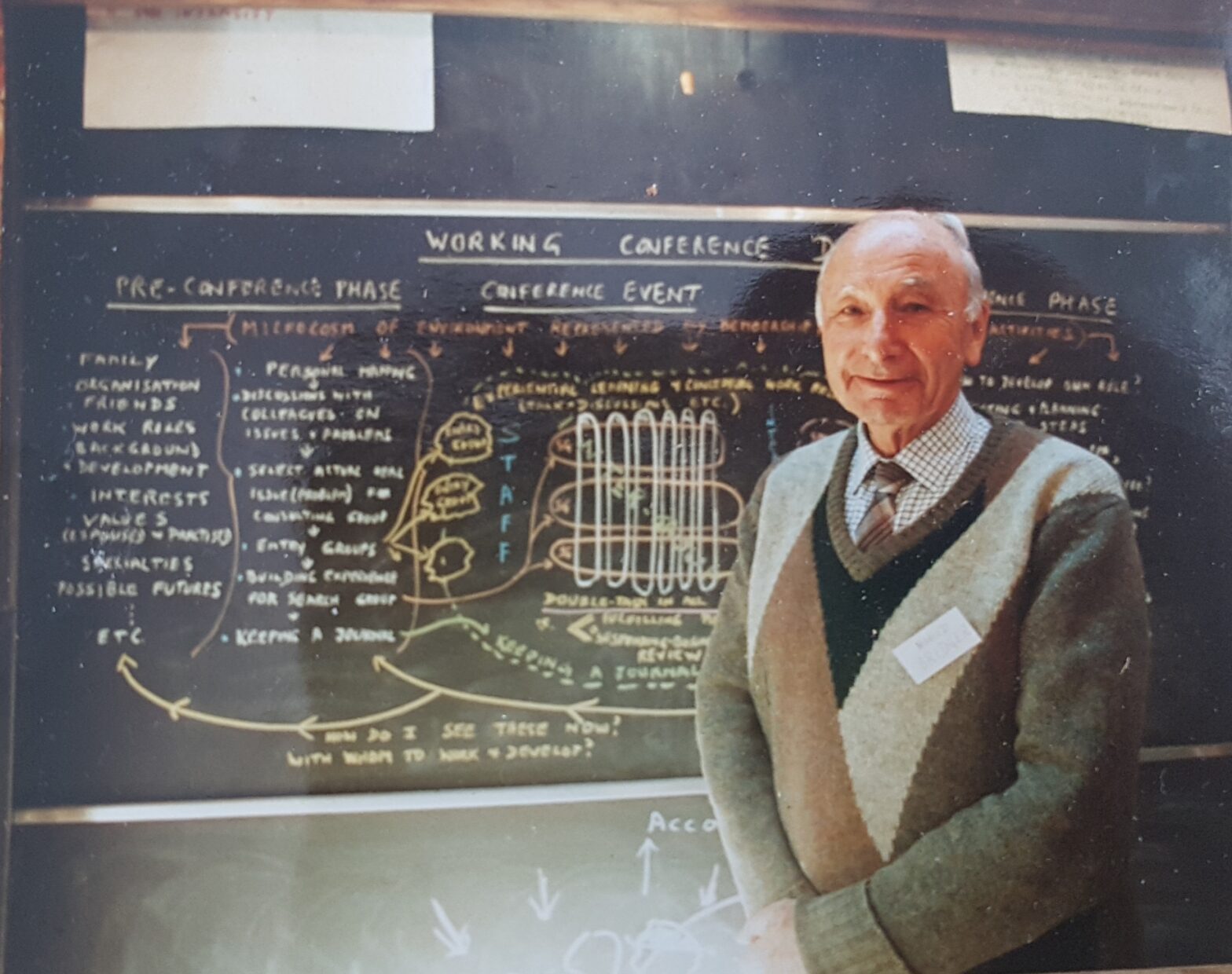
In 2020 The Mulberry Bush charity secured funding from the Wellcome Trust for the project ‘Rediscovering Harold Bridger: His Life, Work and Legacy.’ The project is based within the Planned Environment Therapy Archives, part of the Mulberry Bush Third Space. This 18 month project aims to list, sort, appraise, preserve and catalogue the personal papers of psychoanalyst and social science consultant Harold Bridger, (1909-2005).
Use this link to read a brief biography/administrative history of Harold Bridger.
Harold Bridger’s records, the PET Archive collections and the wider Mulberry Bush Charity ethos are all linked by a relation to Therapeutic Communities. In a paper from 1986 Harold Bridger writes how a Therapeutic Community is ‘a microcosm of society but one in which there is every opportunity for the various aspects and critical features of that community to be explored, understood, tested out and above all, worked through.’ In the following article I want to introduce the work of Mulberry Bush Charity and the PET Archives, as well as provide an insight into Bridger’s link to Therapeutic Communities.
The Mulberry Bush Charity
The vision of the Mulberry Bush is to ‘transform the lives of all those affected by childhood trauma, through education, training, research and specialist therapeutic services.’ The Mulberry Bush mission is ‘to be a leading charity for advancing the education, training, research and specialist therapeutic services for emotionally troubled and traumatised children, young people, adults, their families and communities.’
The Mulberry Bush School is an independent residential special school in the village of Standlake in Oxfordshire, for children aged 5 to 13 years. The school was founded in 1948 by psychotherapist Barbara Dockar Drysdale. The primary task of The Mulberry Bush as a residential school is to provide therapeutic care, treatment and education to children who have suffered severe and traumatic environmental failure.
The charity was founded on a psychodynamic approach. The Mulberry Bush states: ‘We are proud of our strong Therapeutic Community heritage and continue to build on how it informs our practice and services, enhancing the links between; Practice, Teaching and Research.’ This therapeutic community approach extends to all aspects of the charity for teams to carry out their work in a reflective way, including the archives. For instance all staff engage in reflective spaces, supervision and group work as a way to consider the wider impact of the work the charity undertakes and what effect that might have on the individual staff members, as well as the group.
The Planned Environment Therapy Archives
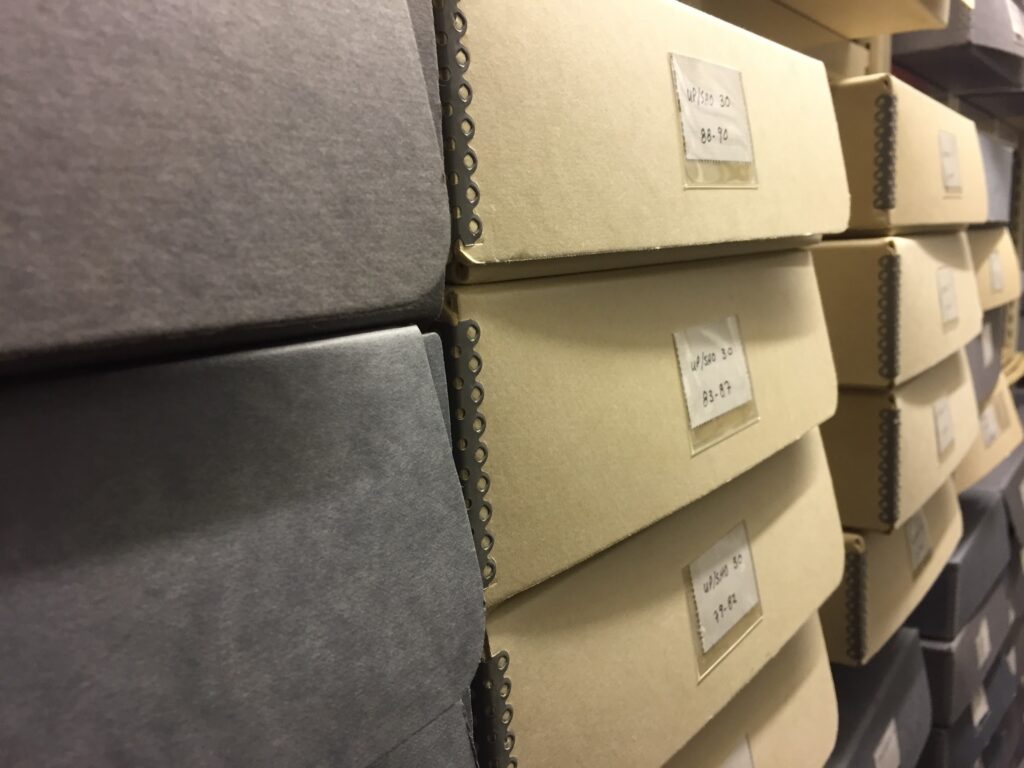
The PET Archives (which sits within the Mulberry Bush Third Space) houses the Mulberry Bush School archives as well as several hundred collections relating to therapeutic communities, group work and enabling environments in settings such as schools, hospitals and prisons. These include hybrid-collections that preserve the history of the individuals, groups and organisations who have contributed to the development of therapeutic living and learning. For example, a new and exciting deposit is from the Ley Community, (a drug and rehabilitation Therapeutic Community founded in Oxford in 1973) which is informing current research on addiction and criminal behaviour in the UK. The Archives team works closely with the Ley Community Trust, as well as other current and former residents and staff of TCs. This work aims to establish a continuing relationship with many TCs and support deposits to the archive.
The PET Archives is also working with the Cassel Hospital to provide material from the Hospital archives to celebrate their centenary as a therapeutic community for people with personality disorders. Next year we plan to host a visit to the Archives for current patients, and we are working with staff to look at how we can integrate archives into the therapy programmes at the Hospital to foster a sense of identity, community and wellbeing.
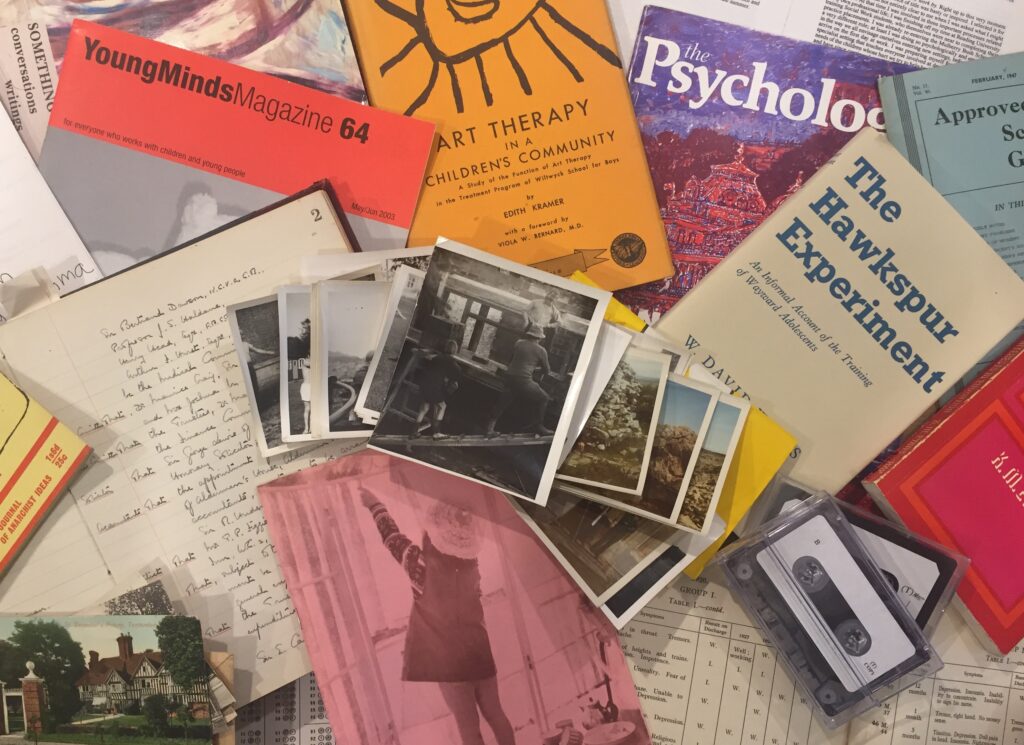
However, the main focus of the Archives team is to support the wider work of the Mulberry Bush through actively engaging in projects with the Education team and Group Living care teams, the Outreach team and the Learning and Research Centre. As such, it is important the Archives team takes a trauma-informed approach to their work, as Debra Doggett, Senior Archivist, explains:
‘Working with clinical files, oral histories in which abuse and trauma is disclosed, psychiatric assessments etc. as well as working closely with people who have experienced trauma, can take its toll on us personally. At the very least the historical language and content can awaken something from our pasts which makes it difficult for us to work with a particular collection. It is our duty of care to archive users and staff to safeguard them from further trauma. That’s why we are taking an informed, transparent approach to preparing staff, researchers and ex-residents before they access the archives. This is also reflected in our catalogue descriptions – we have added a safeguarding alert to the staff side, and where necessary included ‘trigger’ warnings for sensitive content on the public catalogue.
We also encourage our researchers and ex-residents to bring someone with them for support, and ensure we can provide a safe, peaceful place for them to process their emotions if they need to.’
The PET Archives are part of the Trauma Informed Archives Community of Practice alongside many other archives professionals from around the globe.
Harold Bridger’s link to Therapeutic Communities
© HF/LEEWW: 2005.2813.2 Second World War Experience Centre
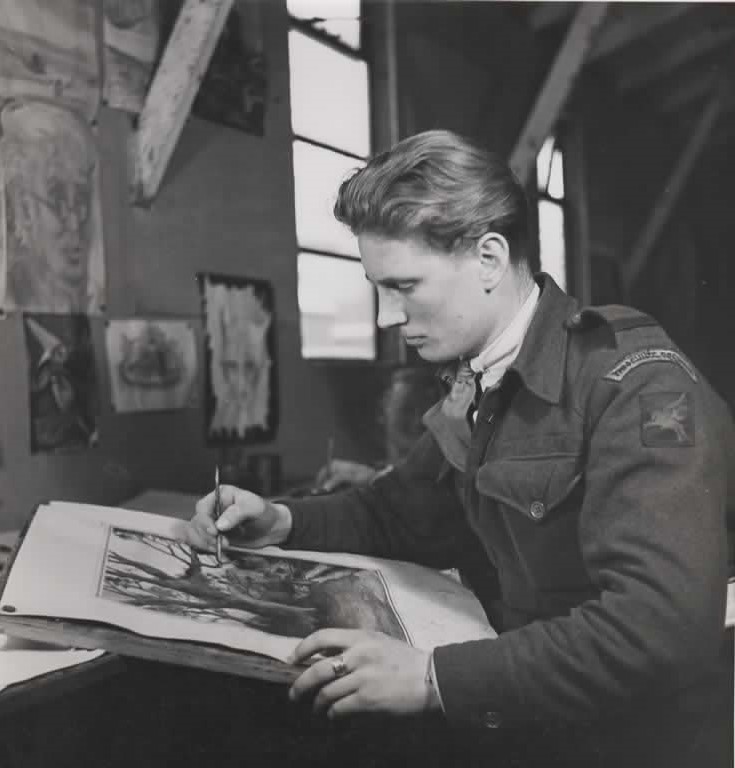
Harold Bridger adopted many roles over his long career. He was a mathematics teacher, a commander in the army, a psychoanalyst, a founder of the Tavistock Institute of Human Relations, a social scientist and somewhat of a traveller taking his theories on group dynamics all over the world. However, his most direct link to the work of the Mulberry Bush and therapeutic communities is his contribution to the Second World War Northfield Experiments at Hollymoor Military Hospital. Northfield was designed to treat psychiatric casualties and to act as a rehabilitation unit for soldiers suffering from neurosis. The hospital would prepare patients to either go back into active service or to go back to civilian life after a period of time in the hospital’s ‘training unit.’ Northfield was a key example of the government and the British army recognising the need for psychological input into the selection and care of soldiers. The experiments began in 1943 led by Wilfred Bion and John Rickman. The experimental aspect of Bion and Rickman’s work was to allow disorder among patients of neurosis in the hope that it might get so bad that the patients would then collectively take control and re-establish order, as soldiers and not patients. However, the experiment unfortunately closed after six weeks.
© HF/LEEWW: 2005.2813.2 Second World War Experience Centre
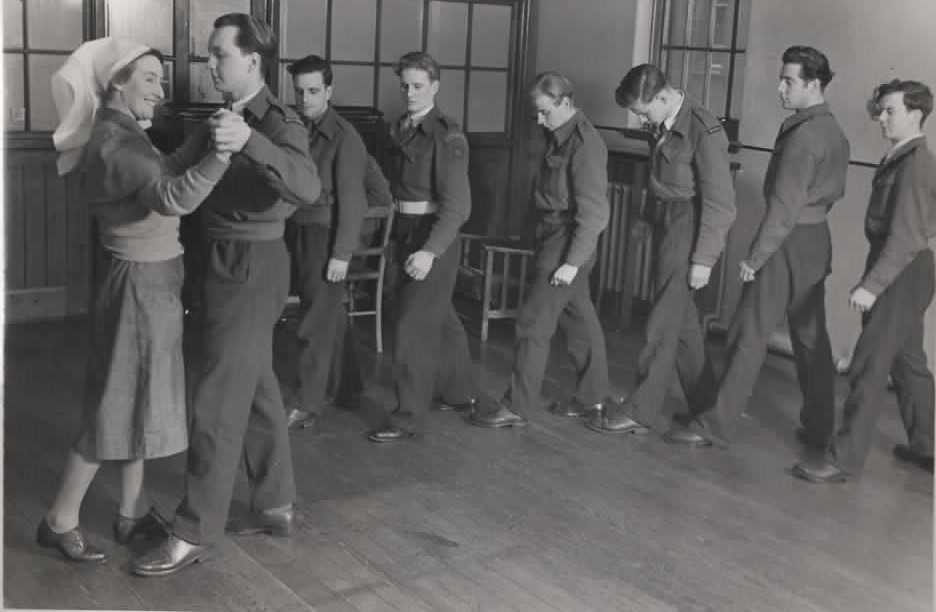
The Second experiment, beginning in 1944, was led by Tom Main, S.H Foulkes and Harold Bridger and it is this experiment that introduced a number of therapeutic community principles. Harold Bridger’s contribution to developing the TC was in his creation of the ‘hospital club.’ Bridger created the club as he saw the need for a central space within the hospital to connect the wards and to induce the idea of the external world in the internal system of the hospital. He believed that this would help patients in their future, whether that meant going back into the army or returning to civilian life. He gave himself the responsibility of being the hospital social therapist and selected a central space with the aim of making the hospital club relate to the whole hospital. In this new system, therapy groups emerged as well as patient-organized group projects and activities. Harold Bridger refers to this aspect of the experiment being distinct from other approaches of the time in that it practiced an open system approach.
The Northfield Experiments were key in the evolution of group psychotherapy and the Therapeutic Communities. The experiments are widely considered and referenced as an early example of a TC and Bridger’s oral history records provide the most obvious link in his personal papers to the PET archives and the wider Mulberry Bush Charity.
Final Thoughts
The project ‘Rediscovering Harold Bridger: His Life, Work and Legacy’ has been an opportunity to use the records of a recognisable figure in the history of TCs to develop the profile of the archive within the wider charity. So far, the project work has reached new audiences through social media, expanded international interest in the charity and the archives, it has contributed to the establishment of a charity wide understanding of archival practice and it has provided the opportunity to collaborate with varying charity departments in online events.
I hope this has provided an insight into Harold Bridger’s papers, the PET Archives, the wider Mulberry Bush Charity and the model of a Therapeutic Community which connects all of these things together.
Annie Lord, Project Archivist
Use the link to the project blog to learn more about Harold Bridger and to follow the project progress.
To have a look at Bridger’s collection on the online catalogue use the link https://archives.mulberrybush.org.uk/records/BRIDGER using the code BRIDGER.